Fourteen years later Paul goes back up to Jerusalem — and this time it is not a brief visit. He goes by revelation. He is not summoned. He is not called to give an account of himself. God tells him to go, and he goes. And he lays out before the pillars — James, Peter, and John — the gospel he has been preaching among the Gentiles.
Galatians 2:2
And I went up by revelation, and communicated unto them that gospel which I preach among the Gentiles, but privately to them which were of reputation, lest by any means I should run, or had run, in vain.
He brings Titus with him — a Greek, an uncircumcised Gentile believer. And look at what happens. Nothing. Titus is not compelled to be circumcised. The pillars do not require it. They do not add anything to Paul's gospel.
Galatians 2:6
But of these who seemed to be somewhat, whatsoever they were, it maketh no matter to me: God accepteth no man's person: for they who seemed to be somewhat in conference added nothing to me.
They added nothing. That is the verdict of the Jerusalem council on Paul's gospel. It needed no supplement. It needed no correction. It stood on its own exactly as Christ had given it to Paul.
— pause —
And then in verse 7 comes one of the most important statements in the New Testament for understanding the two programs of God.
Galatians 2:7–9
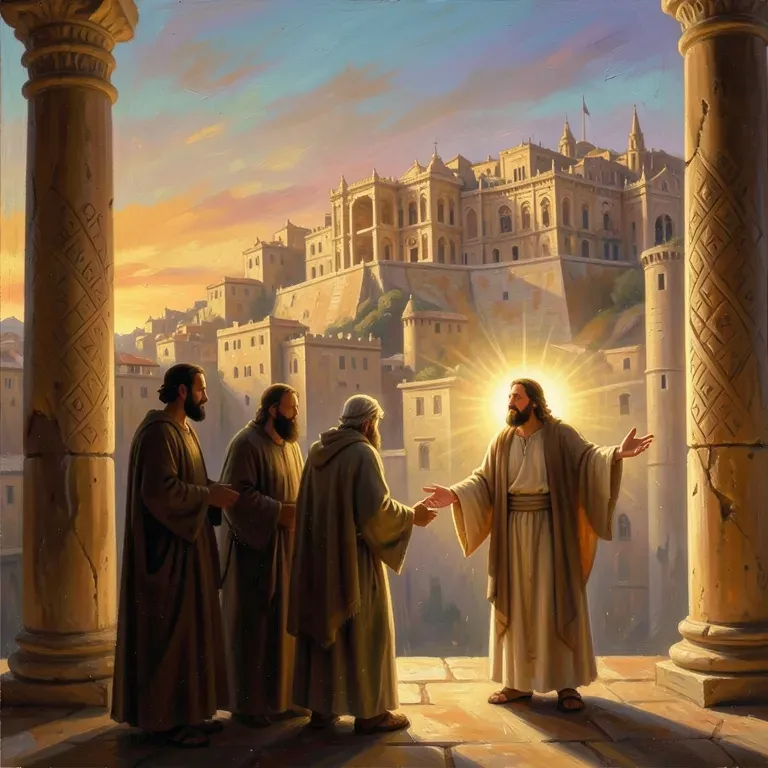
But contrariwise, when they saw that the gospel of the uncircumcision was committed unto me, as the gospel of the circumcision was unto Peter; (for he that wrought effectually in Peter to the apostleship of the circumcision, the same was mighty in me toward the Gentiles:) and when James, Cephas, and John, who seemed to be pillars, perceived the grace that was given unto me, they gave to me and Barnabas the right hands of fellowship; that we should go unto the heathen, and they unto the circumcision.
Two gospels. Recognized and acknowledged right there by the pillars themselves. The gospel of the uncircumcision committed to Paul. The gospel of the circumcision committed to Peter. Two different commissions, two different spheres, two different apostles — and the Jerusalem pillars shake hands on it. This is not Paul asserting something the rest of the apostles disagreed with. This is a formal recognition of the distinction that God himself had made.
— pause —
But then something happens in Antioch that puts the rubber to the road. Peter comes down and he is eating with the Gentile believers — which was itself a statement. He is living as a Gentile, not as a Jew under the law. And then certain people come from James in Jerusalem, and Peter pulls back. He separates himself. He stops eating with the Gentiles because he is afraid of those from the circumcision.
And the rest of the Jewish believers follow him — including Barnabas. Paul says they were all carried away with the dissimulation. The hypocrisy was that contagious.
Paul withstands him to the face.
Galatians 2:11, 14

 Gracecountrymusic