Loading…

Comments
Lyrics
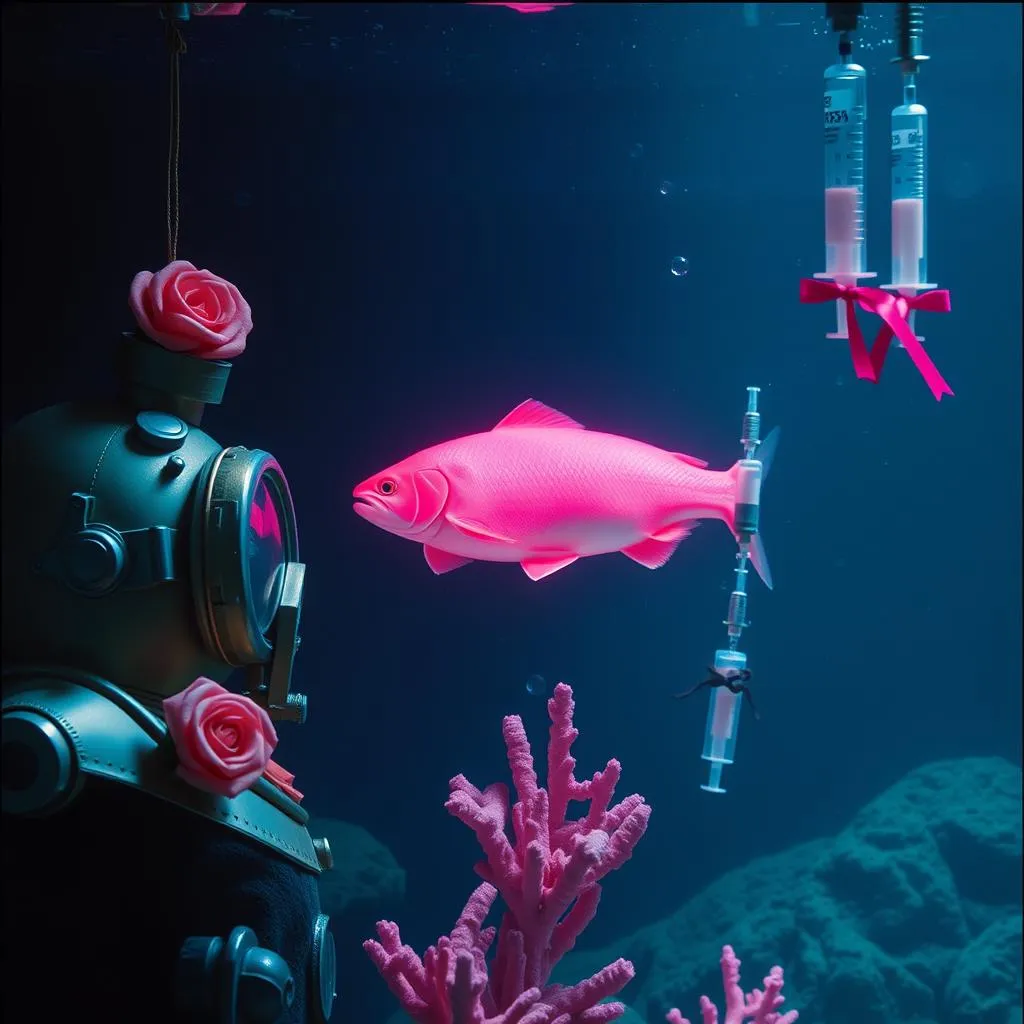
Here is a video mnemonic about Salmonella, Salmon sounds like Salmonella, let's use the swimming salmon to help us remember factoids about Salmonella. Salmonella are gram negative rods that stain pink just like these pink salmon. Just like Salmon, are highly motile & have tails, salmonella are highly motile & have flagella. Salmonella species are H 2 S producers precipitating black on T S I agar. So imagine Salmon swimming not on H 2 0 but in H 2 S, which are dark black muddy waters jist like the black precipitate produced. Next fact is that Salmonella are intracellular organisms, often hiding on macrophages. Just remember salmon inside the aquarium to help you remember intracellular where salmon is the organism and the aquarium is the macrophage housing the organism. Next fact is Salmonella is a facultative anaerobe, preferring aerobic conditions, but can live anaerobically. This particular Salmon is jumping out of the water for aerobic conditions and back in the water for anaerobic conditions. It's also good to know that certain Salmonella, like Salmonella typhi and paratyphi are encapsulated to evade the immune system. Notice this old school encapsulated diver's helmet to help you remember polysaccharide encapsulation for salmonella. Next up, notice the lipstick stain on the aquari glass. The lipstick stain helps me remember lips for LPS. The endotoxin produced with Salmonella. Remember, this is a mnemonic so salmon is not really causing salmonella but salmonella can be caused by a myriad of things. For the species Salmonella enteritidis, it is the contaminated vegetables, raw eggs, raw milk, undercooked poultry deli meats and even keeping pet reptiles that are culprits for Salmonella enteritidis. There's one special species that's solely human to human transmission, and that's salmonella typhi. So the culprit here for salmonella typhi is the chef herself. Let's call our chef Victoria because Salmonella Typhi has a special antigen called V I antigen, exclusively found in salmonella typhi. Remember the story of Typhoid Mary, a cook that infected several people with Salmonella Typhi. Now let's go back to the salmon in the aquarium. Notice the rose ornaments in the background which can help you remember the clinical sign of rose spots found with salmonella infection. Now notice the coral ornament in the background. They can help you remember Peyer's patches, which is the lymphoid tissue that salmonella often infects, found in the gut. Notice the histological slides. Somewhat looks like the coral ornament arrangement here with the peyer's patches. Damage to the peyer's patches can lead to a spectrum of GI symptoms depending on the species of Salmonella. Lastly, treatment. Let's observe these 2 syringes with ties around them that may help you remember the ties here are tied to Salmonella Typhi, which is the only species that gets treatment in the form of IV antibiotics such as IV Ceftriaxone also has a vaccine associated with it.
Details
GeneratedJan 31, 2026
Duration3:03
LanguageEnglish
Style
Tropical Reggaeton with Catchy Rhythm and Summer Party Vibes
Credits
Prompt by SpiritualCrashCart
SpiritualCrashCartModelAria v5