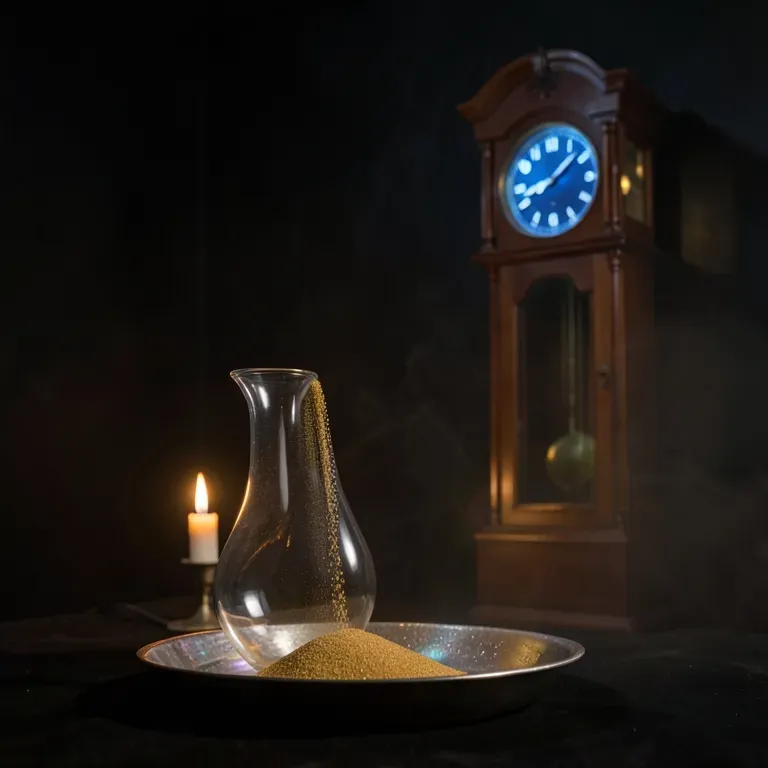
Time slips through our fingers like fine sand. We try to grasp it with desperate, flexing fingers, expecting it to behave like solid rock, but its nature is fluid, granular, and indifferent to our strength. The clock on the wall ticks with a rhythmic finality, a steady click that mimics the steady dropping of grains through a narrow glass neck. We calculate our lives in standard increments—seconds, hours, decades—yet the subjective experience of living completely defies these rigid boundaries. A single minute spent in agony can feel like an eternity, while a decade of comfortable routine vanishes in a single, unmemorable breath.When we look back at our personal histories, we rarely see a smooth, continuous highway. Instead, we see scattered fragments, high-contrast snapshots of moments that somehow managed to stick to our fingers while the rest of the sand fell away. Why do we remember the smell of rain on asphalt from a random Tuesday in childhood, but completely lose the details of an entire semester of school? The human mind is an imperfect sieve. It lets the massive, heavy substance of daily existence slide away unnoticed, keeping only the strange, glittering pebbles of emotional intensity.Our obsession with capturing time has given rise to entire industries. We take thousands of digital photographs, we write detailed journals, we build massive monuments, all in a futile attempt to shout into the wind that we were here. We want to freeze the sand, to melt it down into solid glass so that we can look through it and see our past preserved perfectly. But a life frozen in glass is a life that has stopped moving. The beauty of the sand lies precisely in its movement, in the way it shifts and re-forms with every step we take.To live in continuous resistance to the passage of time is to invite a permanent state of grief. Every hour becomes a loss, every sunset a tragedy, every birthday a countdown. The alternative is not a surrender to despair, but an acceptance of the flow. If the sand must slip through our fingers, then perhaps our goal should not be to hold onto it, but to feel its texture as it passes. We must learn to appreciate the sensation of the movement itself, understanding that the temporary nature of each grain is exactly what gives it its immense, irreplaceable value.